American public discourse was different before 2006. Before then the people used a physical place known as a “town-square” to socialize ideas, and then decide on beliefs and policy by communal consensus. The foundations of these town-square discussions were based on curated information propagated mostly by the news media, religious beliefs, and formal education. But for the past 20 years, the town-square space has digitally migrated into a near-infinite-square space facilitated mainly by the social media platforms “X” (formally known as Twitter), and “Facebook”. What does that mean?
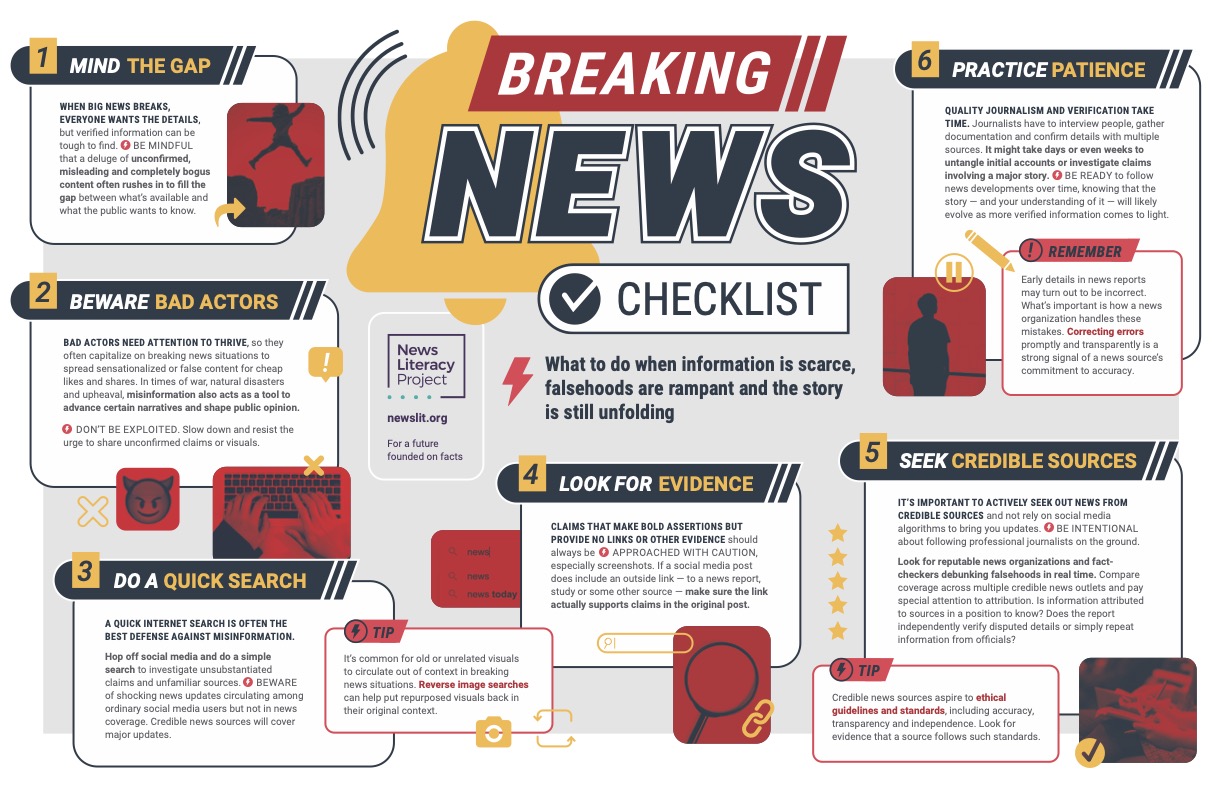
Both X and Facebook are private social media platforms with not just national, but global reach whom allows every person, or entity with an account the capability to reach the masses. As such, the conversations surrounding the information being added, distributed, and consumed on these social media platforms is very broad and can easily be manipulated. What that means is that bad and/or ignorant actors have an outsized impact on shared beliefs, policies, and ultimately social consequences. Furthermore, bad actors such as (but not limited to); grifters, enemy corporate entities, and enemy state actors (just to name a few) effectively disseminate misinformation by convincing unassuming members of X and Facebook to mass circulate their material by aligning personal identity or strong social belief with something novel that elicits a strong emotion. Moreover, because this issue has become so increasingly unmanageable, X and Facebook are continually adapting policies, methods, and practices attempting to shore up damage created by bad actors with concern to the spread of misinformation. Let’s examine what they are up to…
I am going to start with X. X’s primary defense against misinformation is Community Notes, which is a crowdsourced system where contributors contextualize posts, and notes only go public once raters (holding differing viewpoints) agree they’re helpful (in 2026 X began testing AI-drafted notes that humans then refine collaboratively, the jury is still out). It appears the approach holds merit, as community notes broadly reduce the spread of misleading posts (once annotated), lowering total engagement with misleading posts by about 14.9%. Furthermore, a review of COVID-19 vaccine-related notes found medical professionals rated 98% as accurate.
Transversely, the Notes system itself is a reactive system. While a whopping 99.3% of misleading posts get debunking comments on other platforms within two hours, Community Notes take an average of 24.29 hours. What that means is that by the time a note publishes, the misinformation post has typically already reached 80% of its audience. Moreover, coverage is thin too as 91% of posts with a proposed note never get one rated “helpful,” and the helpful-note rate fell from 13.1% in 2024 to 8.2% in 2025 alongside declining contributor retention, bringing into question sustainability. How does this compare to other major platforms?
This path isn’t completely unique to X. Meta ended third-party fact-checking in the U.S. in April 2025 for its own Community Notes-style system, although it’s worth mentioning that Meta’s notes don’t limit a post’s reach. Meanwhile, TikTok launched a similar “Footnotes” feature in 2025, in a way making crowdsourced moderation an industry standard. Some improvements researchers suggest include speeding up early intervention (speed of dissemination is clearly the largest hurdle), pairing ideologically diverse contributors to jointly write notes, publishing more transparency data for independent research, and retaining a model that keeps expert fact-checkers involved.. Overall, Community Notes measurably helps but remains too reaction oriented (thus slow) and narrow to be a complete solution. Now let’s look at Facebook (which I will call Meta from here on out because it is the overarching entity that dictates policy).
Meta’s approach to handling misinformation shifted dramatically when it ended its third-party fact-checking program across Facebook, Instagram, and Threads in the U.S. in April 2025. Fact checking was replaced with a Community Notes system modeled on X’s which used (is using) user-submitted context that only goes public once contributors with differing viewpoints agree it’s accurate, and which, in contrast to the old system, does not limit a flagged post’s reach. Furthermore, Meta has since expanded the feature with alerts, note requests, and helpfulness ratings, while planning to extend it beyond the United States.
However, early results yield similar yet worse bottlenecks than experienced on X. To begin with, over 70,000 contributors have written approximately 15,000 notes, yet just 6% have been published. Meta’s own prior fact-checking system reduced the visibility of false posts by more than 80%, and analysts estimate Meta would need around 2.5 million contributors for Community Notes to reach comparable effectiveness at current scale (and that’s a standard they are nowhere near). For example, the Center for Democracy and Technology has warned specifically about low reach on election misinformation, and researchers note the model may struggle further on visual platforms like Instagram or inside closed groups, where crowdsourced review is harder to apply. Moreover, a German research institute’s 2025 study concluded plainly that Community Notes “cannot substitute for transparent content moderation.” It appears that the clearest fixes mirror those for X. First, be transparent with data in relation to the public. Second, invest heavily in contributor recruitment (still have to figure out the massive scale gap Meta faces). Third, figure out a way to build in faster early-stage intervention given delays let posts go viral before correction. And lastly, preserve some hybrid role for expert review, specifically for things like elections, basic science, and public health rather than replacing professional fact-checking wholesale with an unproven volunteer system that is still establishing a foundation.
In summation, it seems that both X and Meta have, and are currently, employing a misinformation defense system that is reliant on differing members of the town-square to check one another. However, it appears that we have a long way to go before finding a viable solution that effectively curbs the problem.